
 770.560.1792


Where Are All the Shut-Off Valves in Your Home?
When water starts leaking or a pipe bursts, every second counts. Knowing where your home’s shut-off valves are located and what each one controls can make the difference between a quick fix and significant water damage.
Every homeowner should be familiar with these key components of a plumbing system. Here’s what you need to know.
Main water shut-off valve
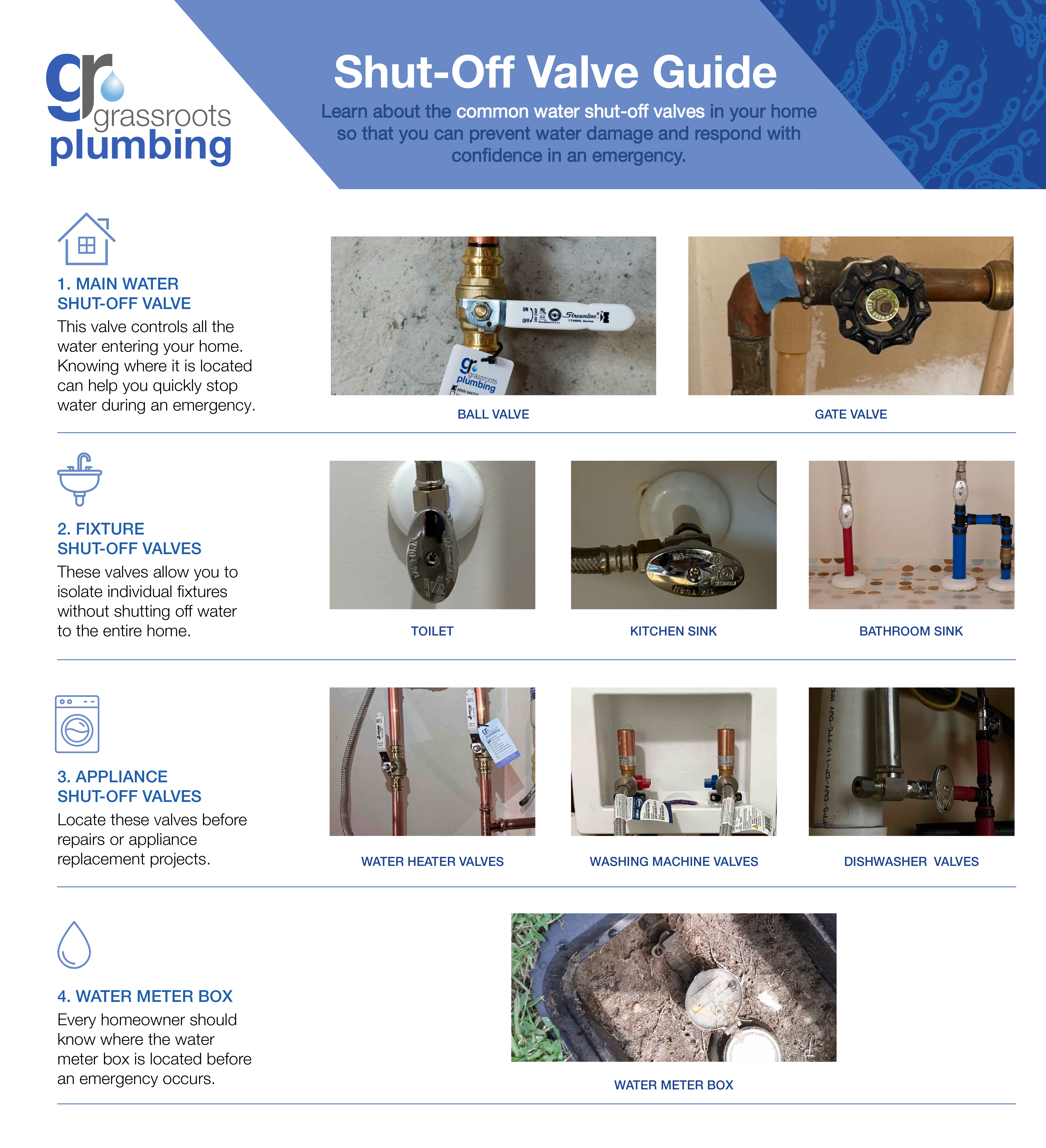
The main shut-off valve controls all the water entering your home. In a major plumbing emergency, this is the valve that stops the flow entirely. It’s your first line of defense.
Where to look:
- Along the front foundation wall, where the main water line enters
- In a basement, crawl space, garage, or utility room
- Near the water heater
- If you still have the inspection report from when you purchased your home, it will be listed there
In most homes, the main valve is located within a few feet of where the main water line enters the structure.
Fixture shut-off valves
In some cases, you don’t need to turn off the water to your entire home. Fixture shut-off valves control water to individual plumbing fixtures and can be used for routine repairs and maintenance.
Toilets
These valves are located behind or just below the toilet tank, typically close to the wall.
Sinks (kitchen & bathroom)
These valves are found inside the cabinet beneath the sink. Most setups include two valves—one for hot water and one for cold.
Faucets & fixtures
These valves are usually connected to the same shut-offs located under sinks or behind access panels.
Appliance shut-off valves
Like fixture shut-off valves, appliance shut-off valves can be used for isolating water supply during repairs or leaks. These can be overlooked, but knowing where they are located can save you some trouble.
- Water heater: Valve located on the cold-water line above the unit
- Washing machine: Typically found behind the machine in a recessed box
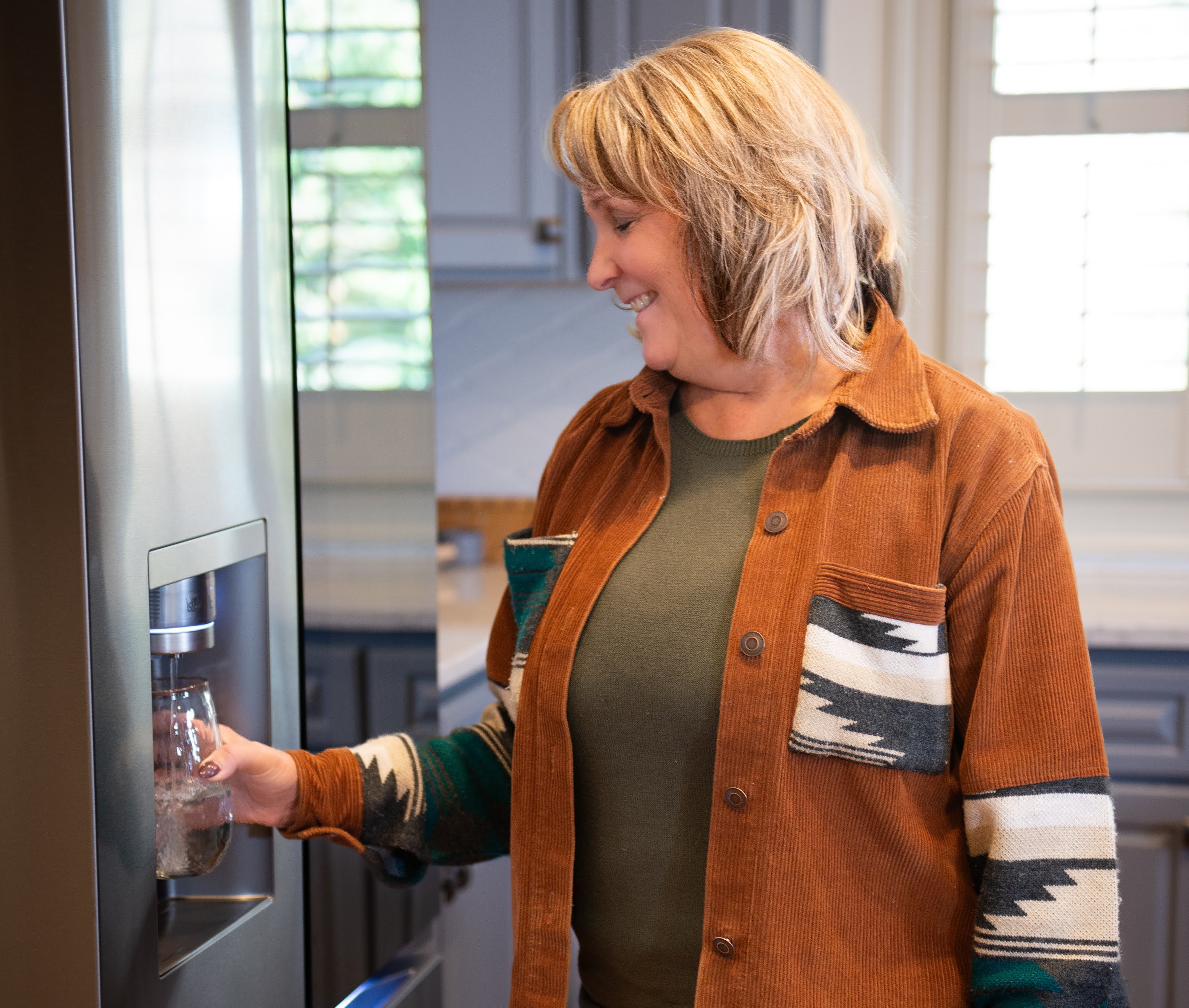
- Refrigerator (ice maker): Located behind the refrigerator or in a nearby cabinet
- Dishwasher: Often installed under the kitchen sink or behind a lower access panel
The water meter box
For extra peace of mind, or if you can’t find the main line in your home, you can go straight to the water meter box.
As a first step, we suggest that you purchase a water meter key. This is the tool you’ll need to turn off your water at the water meter box. They are inexpensive and available at any home retail store. Just ask for a water meter key.
Locate the water meter box
Your water meter box is usually around 10 feet from the curb near the edge of your property line. It might be hidden, but it shouldn’t be hard to locate.
Turn off the water
When you open the water meter box, you’ll see a couple things. The most prominent item is the water meter in the middle. Between the water meter and the side closest to the street, you’ll find the water valve.
Using a water meter key, turn this water valve clockwise a quarter turn so that it points away from the water meter and is perpendicular to the pipe. You can also look for two rings on the water valve. When the water is turned off, the two rings will line up on top of each other.
Why this matters
Shut-off valves play a critical role in protecting a home from water damage.
- They allow water flow to be stopped immediately during emergencies
- They make it possible to complete repairs without shutting down the entire system
- They help reduce the risk of costly damage
One commonly overlooked issue is that valves left unused for long periods can become stuck. Periodically turning them on and off helps ensure they function properly when needed.
Final thoughts
Taking time to locate and understand each shut-off valve in a home is a simple but important step in preventing plumbing emergencies. Clearly identifying these valves—and ensuring they are in working condition—can save time, money, and stress when issues arise.
If you think you might have a leak or need any assistance, you can always reach us at 770.560.1792 or book online.